Why preparation matters when starting a laundromat business
Starting a laundromat business involves more than selecting premises, purchasing machines and opening the doors. Investors need to understand how location, customer demand, equipment capacity, utilities, labour and daily workflows interact before committing capital. A clear operating model can reveal whether projected revenue is realistic and where costs may emerge after launch. For anyone starting a laundromat business, early planning should therefore connect commercial assumptions with the practical requirements of running a reliable, efficient textile operation.
The strongest investment plans consider both the customer proposition and the systems supporting it. Service expectations, machine availability, payment processes, maintenance routines, stock control and reporting all influence the experience delivered after opening. Understanding these elements before construction or fit-out begins can prevent expensive changes later. A detailed plan also gives investors a framework for measuring performance once trading starts, helping management compare actual activity with the assumptions that shaped the original business case.
The strongest investment plans consider both the customer proposition and the systems supporting it. Service expectations, machine availability, payment processes, maintenance routines, stock control and reporting all influence the experience delivered after opening. Understanding these elements before construction or fit-out begins can prevent expensive changes later. A detailed plan also gives investors a framework for measuring performance once trading starts, helping management compare actual activity with the assumptions that shaped the original business case.

Building the foundations for a viable laundromat investment
Assess the location beyond foot traffic
Location is supposed to be evaluated as an operating variable, rather than simply a property decision. Foot traffic, surrounding households, parking, accessibility, nearby competitors and local demand can influence utilisation throughout the week. Investors should also consider the premises' water, drainage, electrical and ventilation requirements before entering into a lease or purchase agreement. For those who are starting a laundromat business, confirming that the site can support the intended equipment mix and projected throughput can prevent infrastructure surprises that erode the original investment case.
Match equipment with the service model
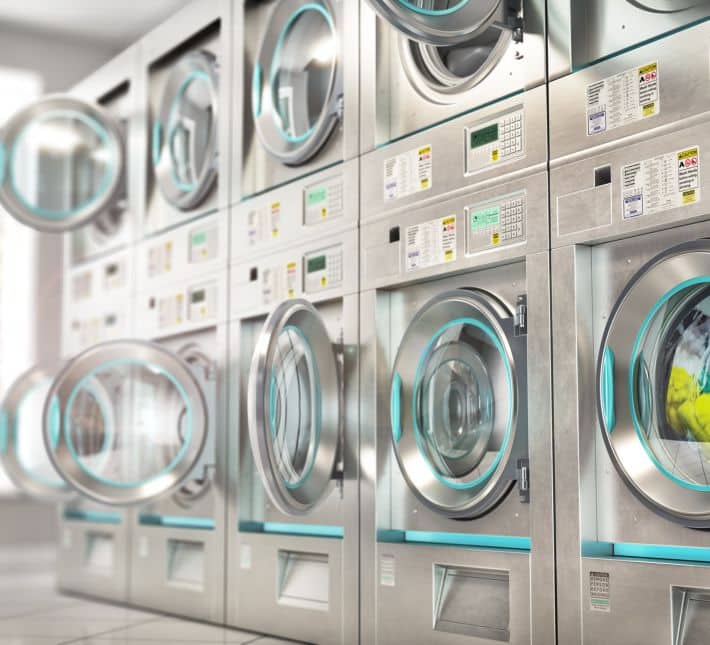
Equipment selection is supposed to follow the service model rather than becoming a collection of machines selected based on price alone. Capacity, cycle times, energy consumption, maintenance requirements and expected utilisation all contribute to the economics of the operation. A considered equipment plan can help prevent bottlenecks during high-demand periods while avoiding unnecessary capital tied up in underused capacity. Investors are advised to also map maintenance responsibilities and replacement planning early, so equipment reliability remains part of the financial model rather than an afterthought.
Test revenue and cash flow assumptions
Revenue assumptions are required to reflect how customers are expected to make use of the facility, including peak periods, average transaction values and available machine capacity. Investors can experiment with different scenarios to understand how changes in utilisation, pricing or operating hours may affect cash flow. When launching a laundromat business, it is useful to separate optimistic projections from conservative operating cases. This creates a clearer view of the point at which the business can cover recurring expenses and how much financial resilience may be needed during the ramp-up period.
Establish repeatable operating procedures
Daily tasks can have a direct effect on productivity, customer satisfaction and operating visibility. Opening checks, machine inspections, cleaning schedules, payment reconciliation, supply replenishment and incident handling should each have defined responsibilities. Establishing a laundromat business with documented workflows can make routine management more consistent and reduce dependence on informal practices. Clear procedures also make it easier to identify where delays, errors or recurring service issues originate, giving operators a practical foundation for improving performance as customer volumes grow.
Use technology to improve operational visibility
Technology should be considered according to the information investors and managers need to run the operation effectively. Centralised records can bring together transactions, customer activity, equipment status, maintenance events and other operational measures that might otherwise sit across disconnected systems. For operators starting a laundromat business, this visibility can make performance trends easier to review and exceptions easier to investigate. The objective is not technology for its own sake, but timely information that supports decisions about resources, service quality and future investment.
Plan for expansion before growth arrives
Growth planning should begin before the first site reaches capacity. An investor may eventually consider additional locations, expanded services, commercial accounts or other revenue opportunities, each of which can increase operational complexity. Setting up a laundromat business with scalable processes makes it easier to establish consistent standards as the enterprise develops. Management can define which activities should remain centralised, which require local oversight and which should be supported by automation, creating a more deliberate pathway from a single operation to a broader business platform.
Turning an initial investment into an organised operation
Build visibility into everyday performance
A laundromat's financial performance depends on more than revenue generated through machine use. Managers need visibility into operating activity, equipment availability, maintenance requirements, customer patterns and recurring costs to understand where performance can be improved. Connecting these areas can make it easier to identify inefficiencies before they become embedded in everyday operations. It also provides investors with more meaningful information when reviewing whether the business is meeting the assumptions established during planning.
A laundromat's financial performance depends on more than revenue generated through machine use. Managers need visibility into operating activity, equipment availability, maintenance requirements, customer patterns and recurring costs to understand where performance can be improved. Connecting these areas can make it easier to identify inefficiencies before they become embedded in everyday operations. It also provides investors with more meaningful information when reviewing whether the business is meeting the assumptions established during planning.

Client success stories
"The transition to Bundle has been instrumental in Allied Laundry continuing to drive change and business improvement by providing real-time customer ordering information, streamlined ordering, and billing processes and have enabled a considerable reduction in staff time. The system has been a real success story for Allied Laundry."
Mark Mabbet
Allied Laundry Service
"No question is a stupid question in the eyes of the Bundle team. Their customer service, expertise and knowledge ensured a smooth transition for me when I purchased my business. The system is user friendly and easy to navigate, while syncing seamlessly with my accounts package."
Geraldine Minogue
Associated Laundry Services
Since the transition from a manual, paper-driven system to Bundle, the time spent managing orders through to invoicing has been reduced by some 75%. From an administrative perspective, it is far easier to track the progress of orders, respond to queries (and resupply dockets).
The management abilities for individual account needs with set days, recurring orders, fixing cut-off times, adding notes to orders and pick-ups means that all relevant persons have the same information.
Customer support is also given a high priority and queries and concerns are met promply and efficiently.
Cynthia Hertrick
Blueline Laundry
Create a scalable management framework
As the operation develops, disconnected processes can make it harder to maintain consistent standards across locations, services and teams. A centralised laundry management system can help bring operational information into a more structured environment, supporting greater visibility as the business grows. With appropriate processes in place, investors can focus on improving utilisation, controlling operating costs and establishing repeatable practices that support expansion without allowing administrative complexity to grow at the same pace.
FAQs
Equipment directly influences capacity, customer experience, energy use and maintenance requirements. The equipment mix should therefore reflect expected demand and the intended operating model rather than focusing solely on purchase price.
Yes. Centralised operational information can improve visibility and consistency, particularly when a business adds locations, services or commercial customers. Scalable technology can also reduce reliance on disconnected manual processes.

©2026 Bundle Laundry Australia, Privacy policy